Group laments the state of IDPs in Nigeria, tasks Journalists on projecting IDPs issues
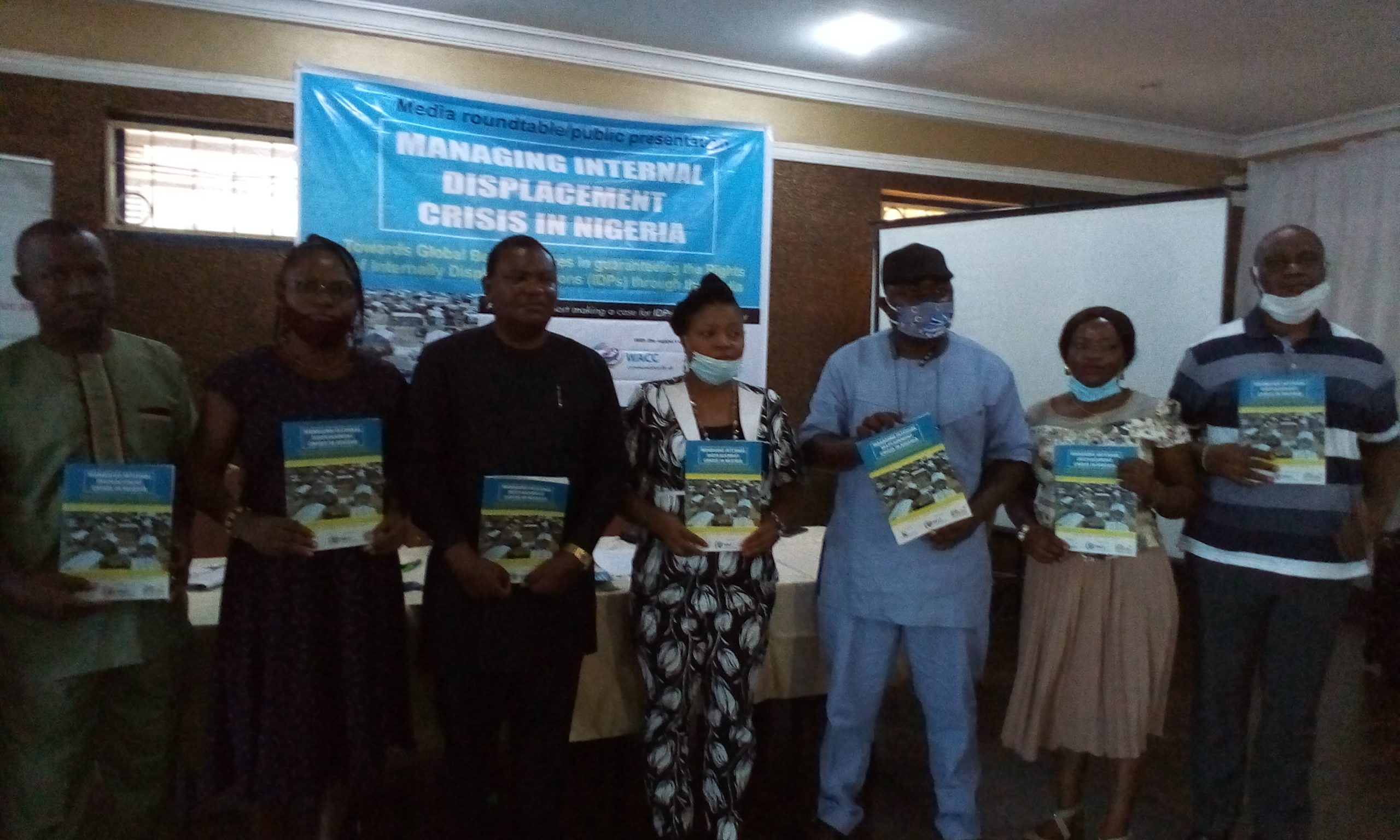
Journalists for Christ International Outreach (JFC) on Thursday lamented the condition of the Internally Displaced Persons (IDPs) in Nigeria, describing it as pitiable.
JFC also tasked the media on helping in projecting Internal Displacement People’s (IDPs) issues to the public.
Mr. Lekan Otufodunrin, the President of JFC handed the task when the organisation presented a report on how journalists can cover and report crimes, maltreatment and misappropriations in IDPs camps across the country, Thursday, August 20, 2020, in Abuja.
Mr. Otufodunrin, in his welcome address, told the participants that the media round table was to brainstorm on the report and create a working template for officials that are directly concerned with the issues of IDPs in Nigeria and also sensitise the media the more on how they can help in projecting IDP issues to the public
The president, who was represented by the Publisher, Church Times Newspapers, Mr Gbenga Oshinaike, expressed hope that the discussion and shared perspectives would help to push the frontiers of awareness on IDPs in Nigeria and by extension help bring an end to the challenges facing the critical aspect of lives in Nigeria.
Reviewing the report, the Director, Daily Trust Foundation, Mr Theophilus Abbah, emphasized that the culture of silence by the media on the poor treatments of IDPs has helped in deepening the crime against them.
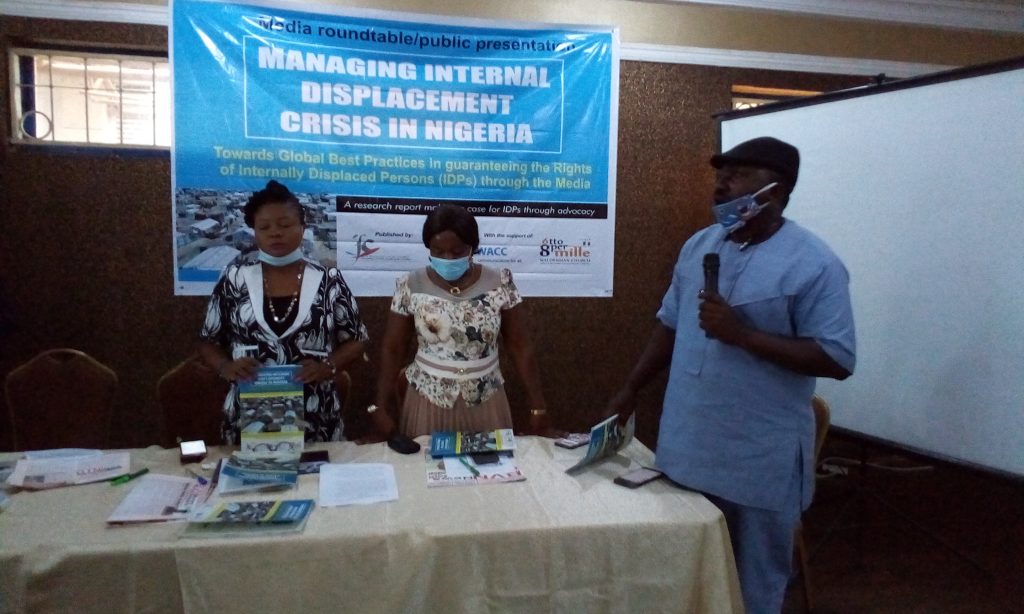
According to him, if the media continue to refuse to expose the crimes committed upon IDPs in the camps, it would foster on in the country.
The report, titled: “Managing Internal Displacement Crisis in Nigeria” on media portrayal of Internally Displaced People (IDP) in Africa, covering Nigeria, Kenya and the Democratic Republic of Congo, was presented at a media round table.
The Public Relation Officer (PRO) of IDPs camp in Durumi, Umoru Gida, speaking at the media roundtable/public presentation of report on management of internal displacement crisis in Nigeria, said most of the bags of rice and Indomie donated to them are usually kept in the store, so that they can sell and use the proceeds to pay for hospitals bills.
Gida explained that they sell foodstuffs donated to them to pay for hospital bills and cater for their other needs, adding that the government has done little or nothing to ameliorate their plights and more often than not, patients taken by them to any of the general hospitals in the FCT are rejected because they are IDPs.
“During the COVID-19 lockdown, we shared only garri for our people, because we could not afford to be eating rice and Indomie when our people are rejected at the hospitals over our inability to pay bills.
“Some of our people who have been having severe health challenges are not attended to at the National Hospital and we are no longer recognised”.
On the issue of insecurity, Umoru lamented that the situation in the camp was being fuelled by the heavy presence of drug barons along the Area I Garage and the camp, who use most of the youths as peddlers.
“Because of lack of money, some of our youths now work for these miscreants who pay them N2, 000 to N3, 000 to commit crimes for them within the FCT.
“Some of our boys have also become drug addicts and the IDP camps now harbours criminals”, Gida said.
He lamented that several letters written to the Special Anti-Robbery Squad (SARS); Inspector General Office; Office of the National Security Adviser; Secretary to the Government of the Federation (SGF) and many others to assist them rid the area of the drug pushers have fell on deaf hear.
Executive Director, Peace Development Project (Research Consultant), Francis Abayomi, in a brief overview, explained that the role of the media is very key in managing the IDP.
Abayomi also stated that there are several camps not recognised and captured in the federal government’s plans, stressing the need to monitor how resources are disbursed and channeled to the IDPs.
He called for strengthening of the enabling laws in the management of the IDPs, while the welfare of security agents protecting the camps needs to prioritised.