Legislative check on executive, bedrock of Nigeria’s democracy, says Abbas
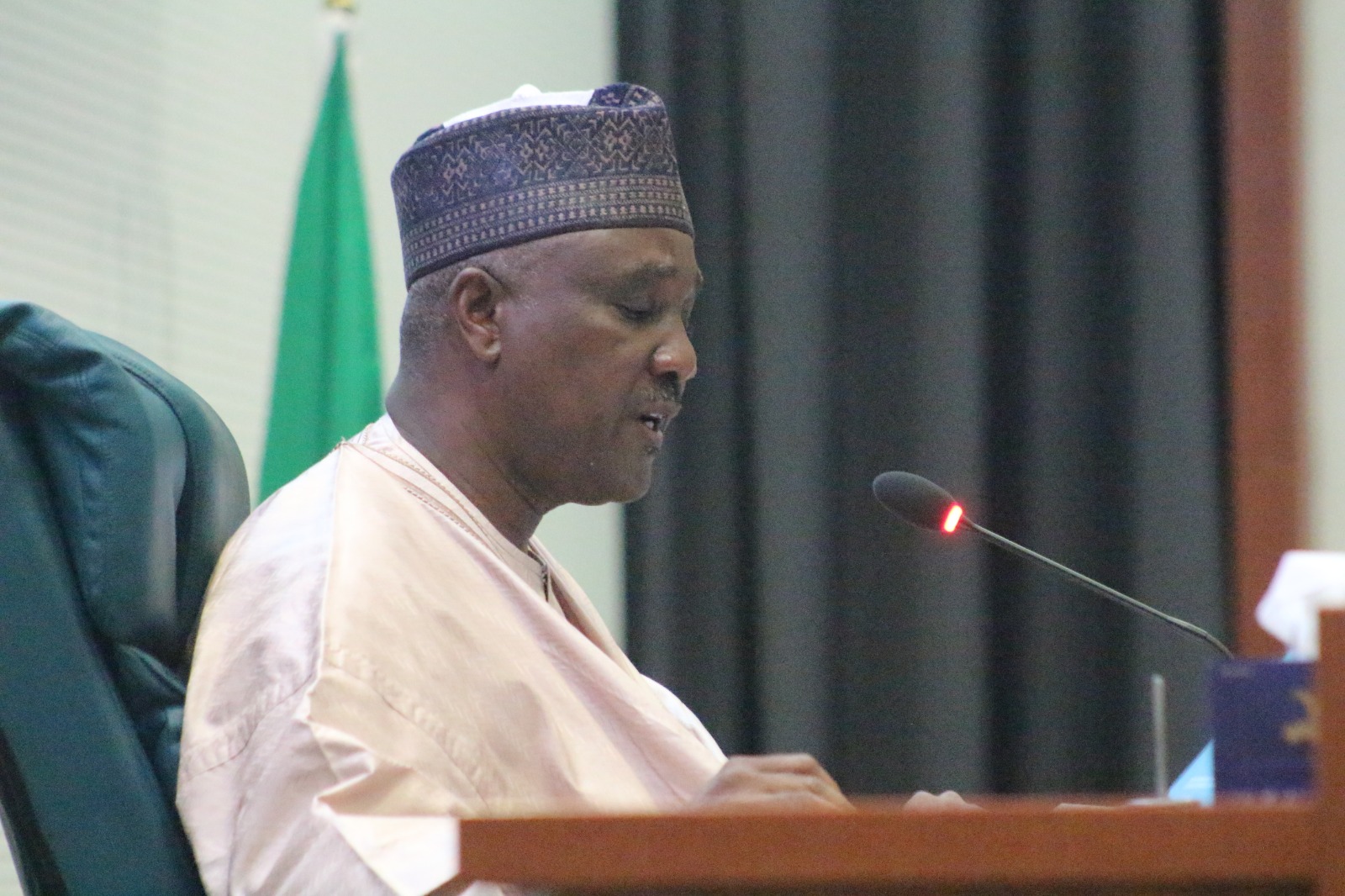
The Speaker of the House of Representatives Rt. Hon. Abbas Tajudeen, has stated that the National Assembly’s oversight of holding the other arms of the government accountable is critical to Nigeria’s democracy.
He, however noted that the 10th Assembly would also be accountable to the public.
The Speaker made this known on Tuesday at a one-day workshop with the theme: “Assessment of the National Monitoring and Evaluation Policy of Nigeria and the Role of Legislature” organised by the Directorate of Planning and Legislative Budget of the National Assembly.
According to the Speaker, who was represented by the Chairman of the House Committee on Legislative Budget, Hon. Mohammed Omar Bio, it was in line with the agenda of the 10th Assembly to ensure through oversight that, “our commonwealth is properly managed for the benefit of all Nigerians.”
He explained that the issue of monitoring and evaluation constitutes a major part of the constitutional responsibility of the Legislature, which is called oversight.
According to him, through oversight, the Legislature as the representatives of the people, ensures that the government remains accountable to citizens on the utilisation of public funds, as well as in the implementation of policies and laws.
He stressed that these policies and laws are codifications of the wishes and aspirations of the Nigerian people hence, it is one function that is critical to democracy as a government of the people.
Speaker Abbas said: “Monitoring and evaluation as a national policy is a framework designed as a way of institutionalising standard practices and culture of good governance in public investment and accountability towards improvement of socio-economic development of the society.
“The policy provides an opportunity to assess the performance of government policies, which enables the government to identify areas of successes and for improvement in strategies in resources application for the purposes of achieving good governance.
As such, “The National Assembly, as the legislative arm of the government, is a critical democratic institution that is empowered to conduct monitoring and evaluation of executive bodies, by the provision of Sections 88 and 89 of the 1999 constitution,”He posited.
“Through this important function, the National Assembly has not only successfully exposed high-profile cases of financial mismanagement and corruption but equally helped in the recovery of public funds, nipped misappropriation in the bud, as well as ensuring the judicious use of public resources,” H added.
He also added that as part of its Legislative Agenda, the 10th House was determined to improve on the discharge of this very critical function.
As part of the efforts to ensure that oversight activities of the House meet the desired objective, Speaker Abbas said committees were now mandatorily required to make quarterly reports of their activities to the leadership of the House, and submit reports of any investigative hearings to the House for further legislative actions.
Speaker Abba stressed that the 10th Assembly was equally opening up the National Assembly through the ‘Open NASS’ project, which not only engages citizens in legislative activities, particularly oversight, but also ensures that citizens are able to question the National Assembly on its usage of allocated funds.