China to build Africa’s first insulin palant in Nigeria, deepens strategic ties
China has unveiled plans to establish Africa’s first local insulin production facility in Nigeria, a move expected to end the country’s dependence on imported insulin and position it as a biotechnology hub for the continent.
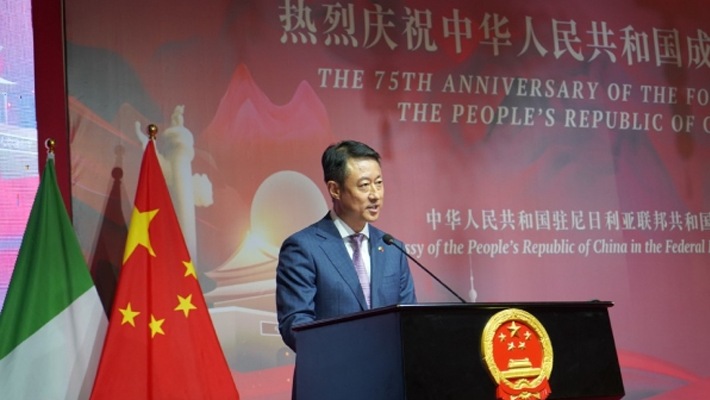
The announcement was made by China’s Ambassador to Nigeria, Yu Dunhai, during a reception in Abuja on Wednesday night to mark the 76th anniversary of the founding of the People’s Republic of China. He described the project as a landmark initiative that would not only transform Nigeria’s healthcare landscape but also boost Africa’s medical innovation capacity.
“This project could end Nigeria’s reliance on imported insulin and position the country as a hub for African medical biotechnology,” Dunhai said, noting that talks with Nigerian authorities were at an advanced stage.
The ambassador stressed that the initiative was part of Beijing’s broader commitment to deepen cooperation with Nigeria across infrastructure, health, education, and culture. He hailed bilateral ties as a “comprehensive strategic partnership” with expanding political, economic, and cultural dimensions.
Dunhai described 2025 as a “pivotal moment” for China’s development and global diplomacy, pointing to Nigeria’s recent endorsement of the Global Governance Initiative (GGI) as evidence of Abuja’s growing international profile.
“Days ago, the Nigerian government issued a statement to endorse the Initiative. China deeply appreciates this support and backs Nigeria’s greater role internationally,” he said.
The envoy also highlighted China’s domestic achievements, including lifting over 800 million people out of poverty, growing its economy to over $18 trillion in 2024, and contributing more than 30 percent of global economic growth. He assured that China’s modernization drive would emphasize peace, shared development, and mutual benefit.
Showcasing tangible outcomes of bilateral cooperation, Dunhai cited the $1.5 billion Lekki Deep Sea Port as a “new national gateway” projected to generate $360 billion in economic benefits and create 170,000 jobs over the next 45 years.
He also referenced the Abuja Water Supply Project, completed in June 2025, which now provides clean water to nearly 3 million residents of the capital city.
“These projects reflect the depth of our cooperation and the shared vision for development between China and Nigeria,” Dunhai said.
On people-to-people exchanges, the ambassador celebrated the recognition of Nigeria’s first female train driver, Issah Abiola, known in China as Bai Yang – who recently received China’s prestigious Friendship Envoy Award.
He further commended Nigeria’s decision to include Mandarin Chinese in the national senior secondary school curriculum, describing it as a step that would “foster deeper understanding between our peoples.”
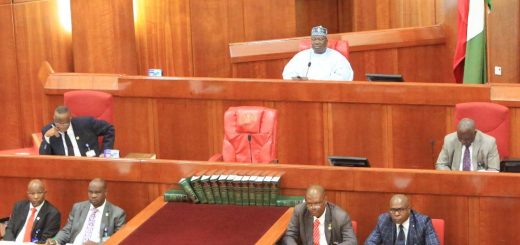
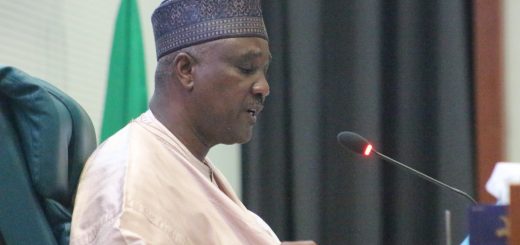
Representing Senate Deputy President Barau Jibrin, Senator Babangida Hussaini lauded the deepening partnership, noting that Nigeria and China share symbolic ties by celebrating their national days on October 1st.
“Chinese enterprises and investments are visible in every corner of Nigeria, contributing to the modernization of our infrastructure,” Jibrin said, citing roads, railways, power plants, and industrial parks as key examples.
He praised President Bola Tinubu’s 2024 state visit to Beijing as a turning point in relations, expressing optimism about future collaborations under Nigeria’s 10-Year Development Plan and China’s Belt and Road Initiative.
“Both frameworks open new opportunities for growth, connectivity, and shared prosperity,” Jibrin said.
He also emphasized the role of parliamentary diplomacy, assuring that the National Assembly would continue to support initiatives that strengthen bilateral ties.