Over 15,000 Nigerians visited UAE after visa restrictions eased, trade hits $5bn
The United Arab Emirates (UAE) has eased visa restrictions for Nigerian travellers, leading to a sharp increase in travel between both countries and helping to strengthen economic ties that saw bilateral non-oil trade rise to $5 billion in 2025.
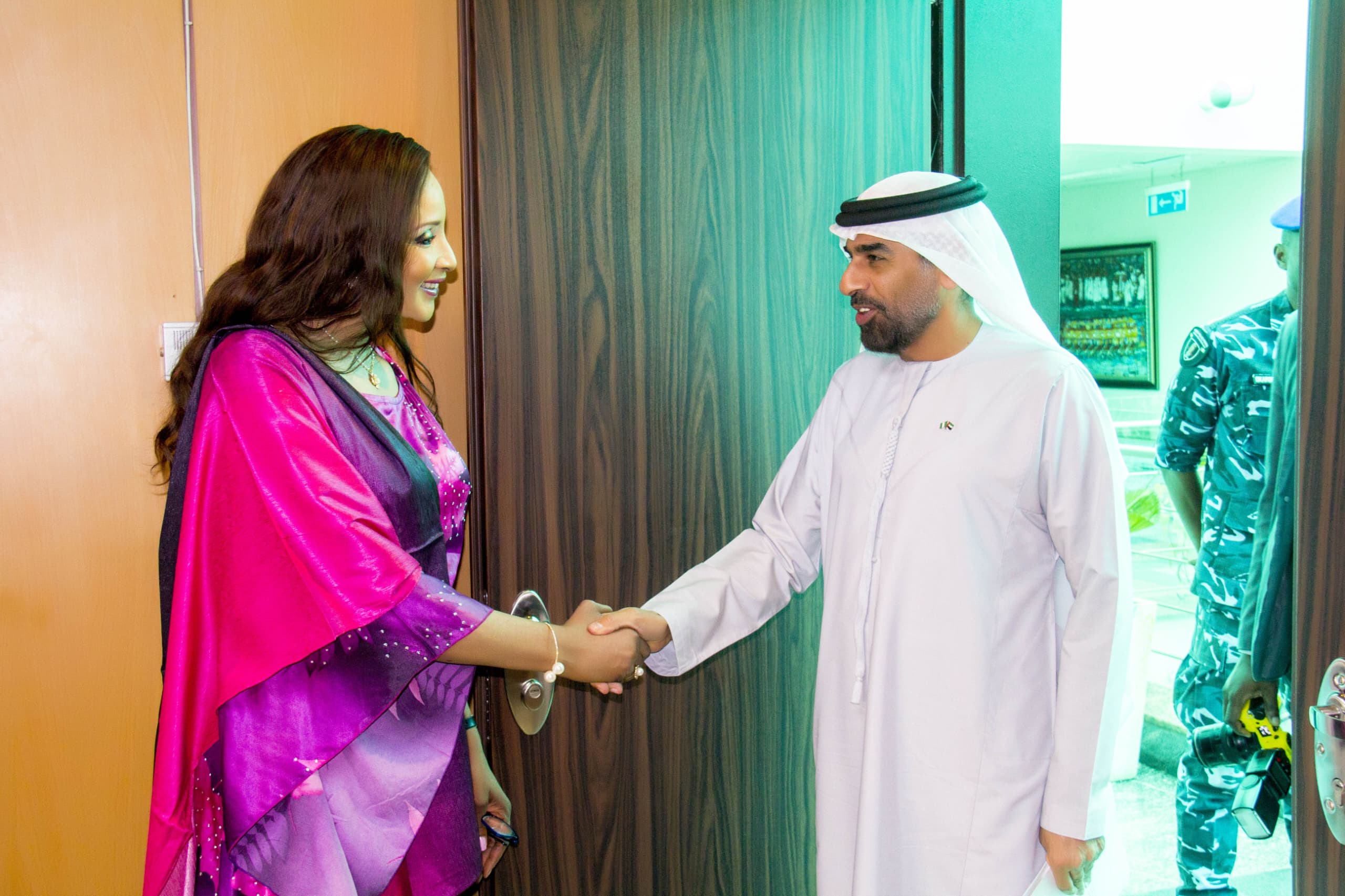
The UAE Ambassador to Nigeria, Salem Saeed Al-Shamsi, disclosed this during a meeting with the Minister of Foreign Affairs, Ambassador Bianca Odumegwu-Ojukwu, in Abuja, where both sides reviewed progress in diplomatic and economic relations.
Al-Shamsi said concerns surrounding visa access for Nigerians had been largely resolved, noting that Nigerian applicants were no longer facing visa rejections as previously experienced.
The envoy revealed that the relaxation of visa restrictions has already yielded positive results, with more than 15,000 Nigerians travelling to the UAE over the past year.
The development marks a significant turnaround in relations between both countries following months of diplomatic engagements aimed at resolving travel and mobility concerns that had affected citizens and businesses.
According to the ambassador, the improved travel environment has coincided with stronger economic cooperation, reflected in the growth of non-oil trade between the two nations.
He disclosed that trade volume increased from $4.3 billion in 2024 to $5 billion in 2025 and is projected to rise further to about $8 billion by 2027.
Al-Shamsi attributed the growth to expanding trade flows, investment partnerships and increasing interactions between citizens of both countries, which have maintained diplomatic relations since 1971.
In a further boost to economic cooperation, the ambassador announced that First Abu Dhabi Bank (FAB), one of the UAE’s leading financial institutions, is set to commence operations in Lagos.
He also disclosed that Etihad Airways would begin direct flights to Abuja later this year, a move expected to enhance connectivity, facilitate business travel and strengthen tourism and investment opportunities between the two countries.
Beyond trade and investment, Al-Shamsi reiterated the UAE’s support for Nigeria’s efforts to tackle insecurity and terrorism.
He noted that the UAE has consistently condemned terrorist attacks in Nigeria and has issued at least eight official statements denouncing acts of terror in the country.
The ambassador’s visit also served as an opportunity to deliver a congratulatory message from the UAE Deputy Prime Minister and Minister of Foreign Affairs, Sheikh Abdullah bin Zayed Al Nahyan, to Odumegwu-Ojukwu on her appointment as Nigeria’s Minister of Foreign Affairs.
Responding, the minister welcomed the progress made in resolving visa-related issues, describing it as one of the most notable achievements in bilateral relations over the past year.
She recalled that visa concerns featured prominently during her tenure as Minister of State for Foreign Affairs and expressed satisfaction that sustained engagement had led to meaningful improvements.
“I am happy to say that a lot of the issues raised when I was Minister of State for Foreign Affairs have been resolved in less than a year, especially regarding visas,” she said.
Odumegwu-Ojukwu noted that the improved visa regime had not only increased travel but also contributed to stronger business and commercial interactions between the two countries.
She commended the UAE government for its role in expanding economic cooperation with Nigeria.
“In addition, you have been able to move the non-oil trade volume between both countries from $4.3 billion in 2024 to over $5 billion in 2025. This shows your commitment and unrelenting effort in deepening our bilateral relations,” she said.
The minister reaffirmed Nigeria’s commitment to attracting foreign investment and creating a conducive environment for businesses, including investments from UAE-based sovereign wealth funds and private sector players.
She also highlighted ongoing efforts to implement the Comprehensive Economic Partnership Agreement (CEPA) signed by both countries, describing it as a major framework that would unlock new opportunities for businesses, professionals and workers.
According to her, the agreement has the potential to significantly transform economic relations between Nigeria and the UAE by promoting trade, investment and broader commercial cooperation.
Odumegwu-Ojukwu further disclosed that Sheikh Abdullah was the first foreign official to personally congratulate her following her appointment by President Bola Tinubu as Minister of Foreign Affairs.
She said the UAE leader also extended an invitation for her to visit the Gulf nation, a gesture she described as a reflection of the strong relationship between both countries.
“I am so pleased to have received the call from His Highness, the Deputy Prime Minister, and his prayers and encouragement to me. It was actually the first of such calls. He even extended an invitation for me to visit the UAE. This profound gesture is most sincerely appreciated,” she said.
The minister reiterated Nigeria’s commitment to strengthening diplomatic, economic and people-to-people relations with the UAE, expressing confidence that recent progress on visa access, trade, banking and air connectivity would usher in a new era of cooperation.
The latest developments underscore a renewed momentum in Nigeria-UAE relations, with both countries seeking to expand trade, boost investment flows and facilitate easier movement of people as part of a broader strategy to deepen bilateral engagement.