Group disowns Northern Elders’ comments on FIRS, backs Tinubu’s economic reforms
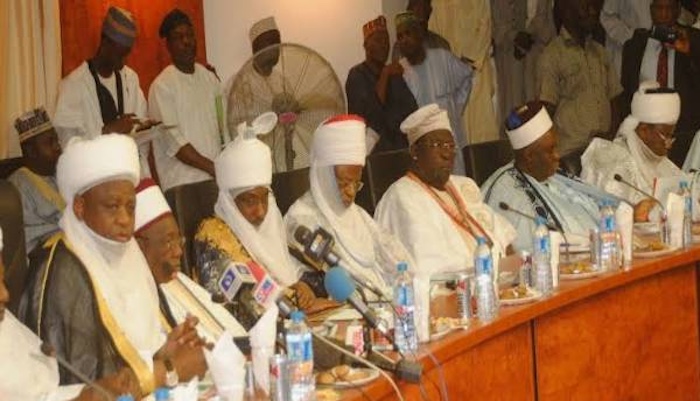
A group of Concerned Northern Elders has distanced itself from recent statements attributed to the Northern Elders Forum (NEF) on the Federal Inland Revenue Service (FIRS), saying the position does not reflect the broader economic and development interests of the North.
In a statement issued on Tuesday by Nasir Manguno, the group said it considered it necessary to clarify its position in order to avoid what it described as a misrepresentation of Northern opinion on revenue administration and ongoing economic reforms.
The elders said the reported opposition by the NEF to the FIRS, its Executive Chairman and the economic reform agenda of President Bola Tinubu was inconsistent with the region’s long-term development priorities and the need for stronger public institutions.
According to the statement, the NEF has increasingly shifted away from its traditional role as a platform for consensus-building, becoming more aligned with political grievances rather than constructive engagement on national economic issues.
The group commended the current leadership of the FIRS, noting that the agency has recorded improved revenue performance, expanded non-oil revenue mobilisation and increased the use of technology and data analytics to reduce leakages in tax administration.
It added that reforms at the service have placed greater emphasis on compliance and equity, reducing exemptions historically associated with influence and privilege.
“These outcomes are measurable and reflect the gains that can be achieved through institutional efficiency and accountability,” the elders said, adding that resistance to reform often emerges when long-standing inefficiencies are challenged.
On economic reform, the group said the government inherited structural weaknesses marked by subsidy dependence, limited transparency and uneven compliance.
It described the administration’s reform choices as necessary steps aimed at stabilising public finances and restoring macroeconomic balance.
The elders argued that revenue reform should be seen as a critical component of nation-building rather than a punitive measure, noting that sustainable development requires broad-based contribution to public finances rather than over-reliance on a narrow segment of the population.
The group also expressed support for recent Memoranda of Understanding signed by the FIRS to improve inter-agency cooperation, harmonise data systems and reduce duplication across government revenue platforms. Such initiatives, it said, are essential for improving efficiency and strengthening fiscal governance.
Addressing the political dimension of the debate, the elders said recent criticism of the FIRS appeared to coincide with heightened political positioning by opposition interests.
They cautioned against framing revenue reforms in regional or partisan terms.
According to the statement, the North’s core development priorities remain job creation, infrastructure expansion, education and accountability, which require effective institutions and predictable revenue systems.
The group reaffirmed its support for the leadership of the FIRS and the Tinubu administration’s economic reform agenda, stressing that long-term growth and fiscal sustainability depend on consistent implementation of reforms rather than policy reversals.
“The North is not opposed to reform but to economic stagnation. Progress requires strong institutions, transparent revenue systems and accountable leadership,” the statement said.