Nigeria calls for urgent global action to halt fissile material production
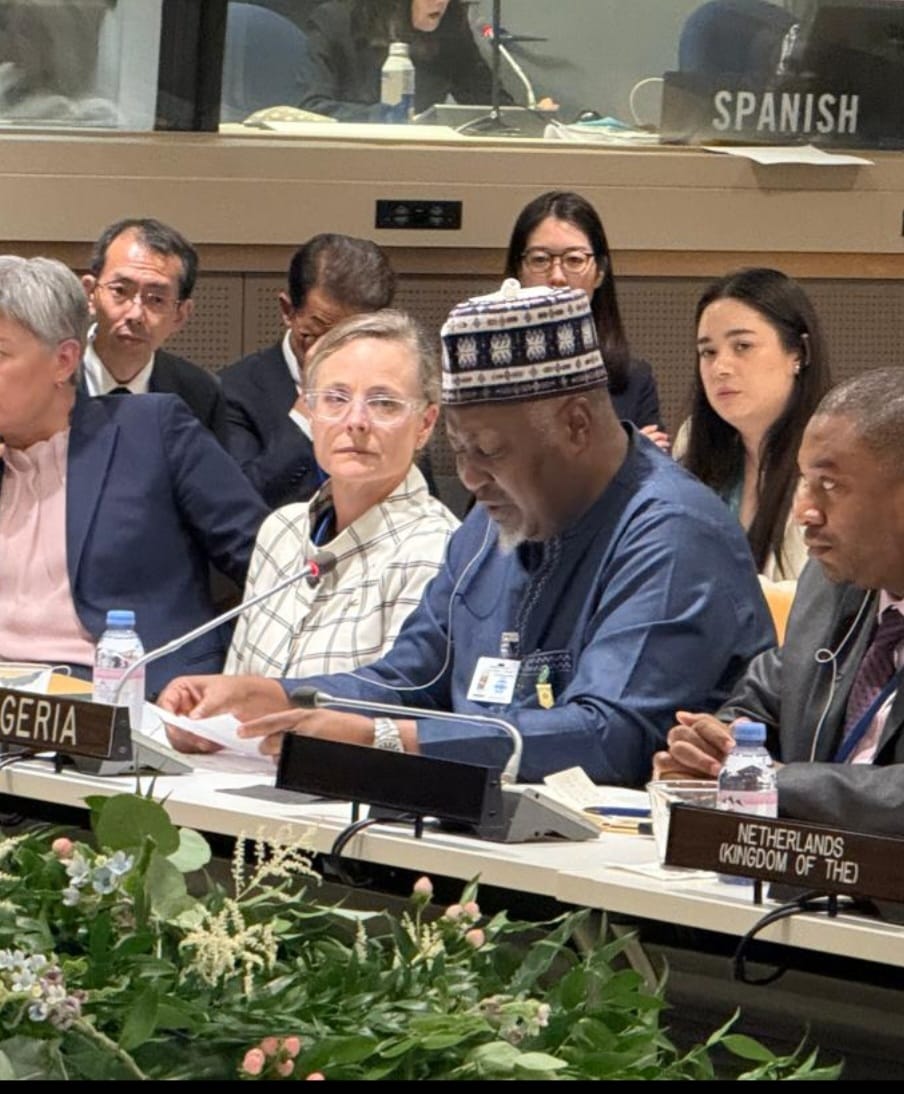
Nigeria has renewed its call for urgent international action to halt the production of fissile material for nuclear weapons, urging world leaders to move beyond rhetoric and begin negotiations on a global treaty that would close one of the last major loopholes in nuclear disarmament.
The Minister of Defence, Mohammed Abubakar Badaru, made the appeal on Thursday at the inaugural Ministerial Meeting of the Friends of a Fissile Material Cut-off Treaty (FMCT), convened by Japan on the sidelines of the 80th United Nations General Assembly in New York.
He described the proposed treaty as not just a legal obligation, but a moral imperative for humanity.
“Closing the fissile material gap is the most realistic way to stop an uncontrolled arms race. The FMCT will rebuild trust, strengthen the Non-Proliferation Treaty, and give momentum back to disarmament”, Badaru said.
The minister stressed that the 80th anniversary of the atomic bombings of Hiroshima and Nagasaki should serve as a global reminder of the catastrophic consequences of nuclear weapons.
“The memory of Hiroshima and Nagasaki compels us to act with courage. The survival of humanity demands it,” he added.
Nigeria also pointed to Africa’s leadership in nuclear restraint through the Treaty of Pelindaba, which established the continent as a nuclear-weapon-free zone.
“Africa has shown that restraint is possible. Nigeria now calls for that same spirit to guide global action,” Badaru noted.
To fast-track progress towards a binding FMCT, the minister outlined three urgent measures: a worldwide moratorium on the production of fissile material for nuclear arms, the dismantling or conversion of facilities for peaceful purposes, and leveraging such steps to build political will toward a universal, verifiable, and non-discriminatory treaty.
He further linked Nigeria’s disarmament push to President Bola Ahmed Tinubu’s Renewed Hope Agenda, highlighting the intersection of security, peace, and development.
“Disarmament is not an abstract debate. Every step we take to reduce nuclear risks frees resources for health, education, and economic growth,” he said.
Nigeria’s strong stance positions it as a bridge-builder in the global disarmament debate, seeking to translate Africa’s achievements in nuclear restraint into a catalyst for wider international action at a time when global security is under strain.