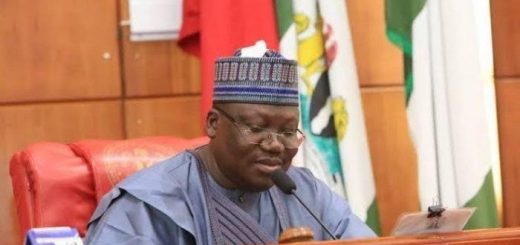
Nigeria economy is not beyond repair – Bulkachuwa
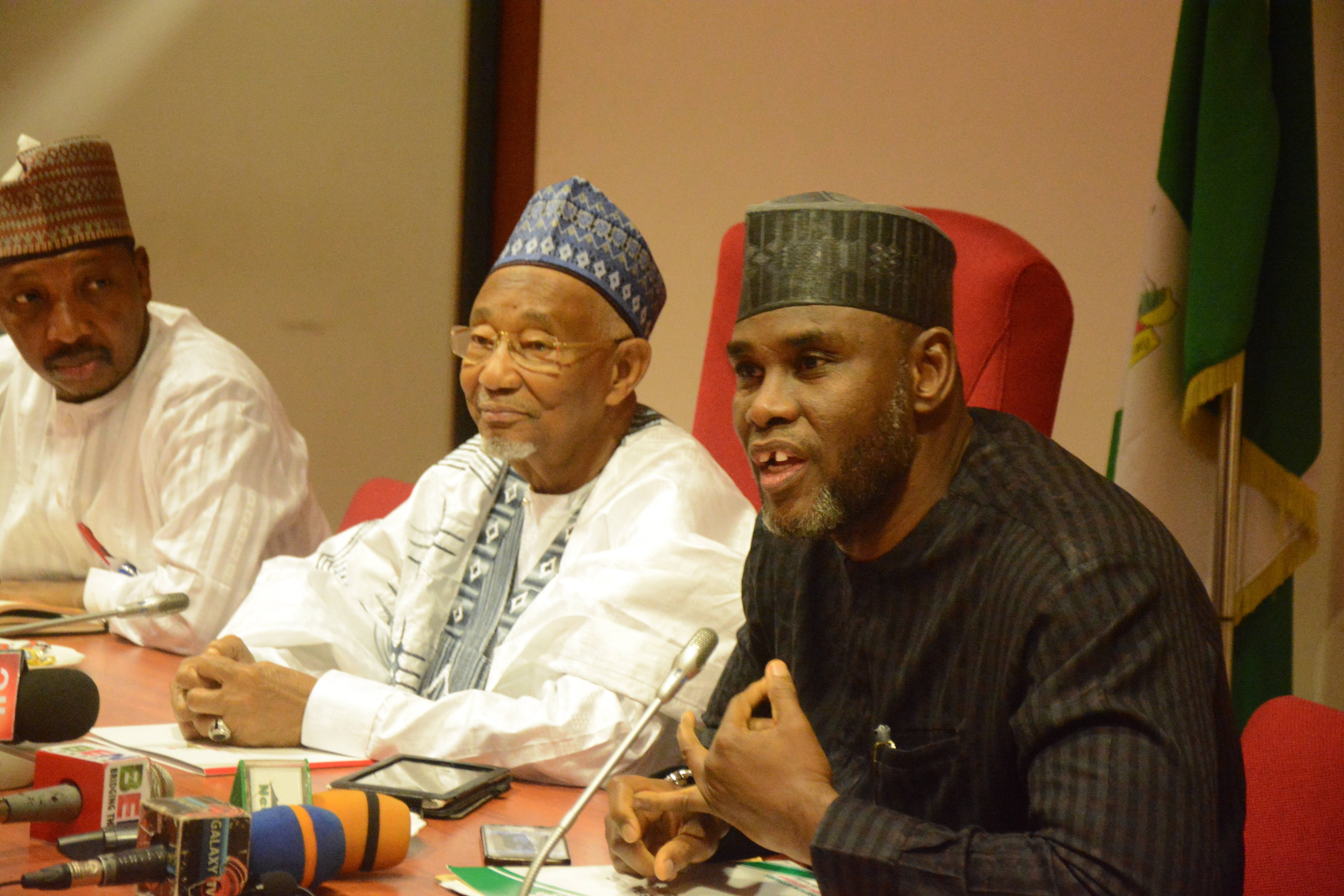
Senate Committee met on Thursday with top official of the Ministryof Foreign Affairs on the damage arising from xenophobic attack in South Africa, at interactive session.
As the second batch of Nigerians return from South Africa in the wake of xenophobia attack on Nigerians and other Africans in the former Apertheid enclave.
The chairman of the Senate Committee on Foreign Affairs, Senator Mohammed Bulkachuwa urged Nigerians to repair the damage done over time to the nation’s economy, insisting that the condition of the economy was not beyond redemption.
“If Ghana, whose economy was in shambles in the 1980s with over 100 cedis exchanging for one US Dollar can positively turn around its situation to what it is today with 4.2 cedis exchanging for a dollar, Nigeria can also do the same, if the government and the governed can put their acts together in that direction”.
Noting that even developed countries of the world like United States of America (USA), Republic of China among others have all their citizens domiciled at home.
They posited that what must be addressed by us is to put things in proper shape so that those who will be traveling out, will largely be for excursion or tourism reasons, and not seeking greener pastures as it is now.
During the visit, a Memorandum of Understanding (MoU) and other key agreements between the two countries would be signed on means of preventing and mitigating such attacks in the future.
In the submission before the committee, the Permanent Secretary in the Ministry of Foreign Affairs, Mustapha Suleiman said a wide range of of issues would be tabled at the upcoming Nigeria-South Africa Summit in October.
As required, mechanism will be in place for Nigerian Commission there to have information on Nigerians resident in South Africa.
It is indicated that 821 Nigerians have been affected by the recent xenophobic attack and have been evacuated back home or show interest for that purpose.
According to Suleiman, the next session of the Nigeria Africa Bi-National Commission (BNC) will hold in Pretoria in October to evolve documented solution to xenophobic attacks on Nigerian in that country stated by Suleiman at National Assembly Senate interface on Foreign Affairs.
Senate Committee, as part of government effort at ending attack on Nigerians nationals in South Africa.
According to report, the Nigeria-South Africa Bi-National Commission (BNC), was established in 1999, to promote trade and investment as well as enhance people to people cooperation and institutional building between the two countries and it is headed by the Vice President of both countries to effectively structure bilateral relations through the establishment of the Bi-National Commission and hosted by rotation between both countries and was held last in 2009.
“Essentially, we are trying to make sure that we have subsisting agreement that will address these issues now and in the future and other issues will be part of the definition of our relationship between Nigeria and South Africa.
And also determine our actions if such issue happens which I think in the last few years, as the xenophobic attack overtime is the climax as it come to the fore that South Africa must protect Nigerians citizens”, Muhammed said.
Suleiman posited President Muhammadu Buhari has directed the ministry to use the conference to bring up all the issues that are challenging and iritating Nigerians relationship in South Africa, seeking remedy while the Minister of Foreign Affairs, Gofery Oyema had also convened an inter-ministerial meeting with various Ministries to get input on other issues to be brought for discussion at
the conference as attempt to preserve the bilateral and diplomatic ties and to serve as platform for both countries to discuss on how best to address critical issues such as xenophobic attack in the October.
On what spark off diplomatic rift, in conclusion to questions from newsmen, the committee chairman said taking advantage of the likely xenophobic attack like Ghana did positively during the Ghana-must-go era is largely dependent on Nigeria.