Nigeria launches reputation management group to enhance national image
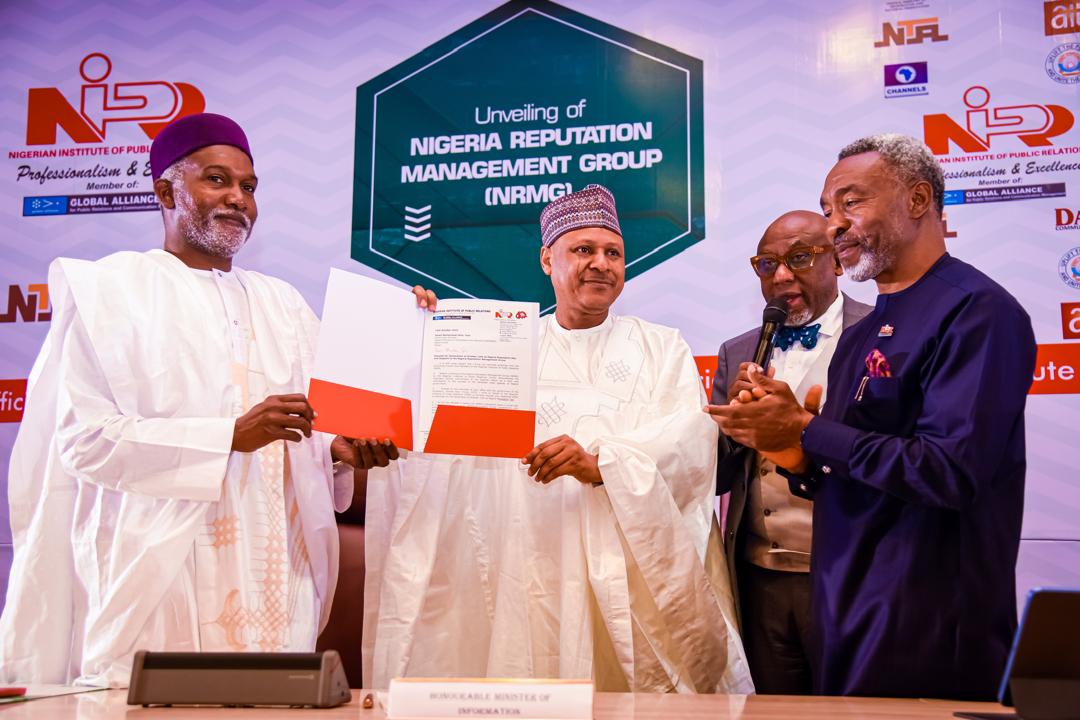
The Nigerian Institute of Public Relations (NIPR) has officially launched the Nigeria Reputation Management Group (NRMG), a strategic initiative aimed at managing and shaping the country’s reputation.
The unveiling took place on Tuesday in Abuja, drawing notable attendance from key government officials, including the Minister of Foreign Affairs, Yusuf Maitama Tuggar, and Minister of Information, Mohammed Idris, along with former and current leaders and fellows of the NIPR.
In his opening remarks, Tuggar highlighted the significant impact of perception—both positive and negative—on Nigeria’s political standing, economic growth, and social cohesion.
He emphasized the rapid pace at which information travels in today’s digital age, stating, “A single event, a careless statement, or even a misleading news story can go viral within minutes, spreading across borders and continents.”
The Minister pointed to the persistent issue of misinformation and its capacity to distort public opinion and damage reputations.
He noted that while the COVID-19 pandemic restricted the movement of people and goods, the flow of information remained uninterrupted, allowing movements such as Black Lives Matter and Nigeria’s own END-SARS to gain international traction.
Tuggar emphasized the critical role of social media in shaping national perceptions, acknowledging that platforms like Twitter, Facebook, Instagram, and TikTok empower ordinary citizens to create and disseminate information rapidly.
However, he also warned that this democratization of information poses significant challenges, particularly regarding national reputation management.
He further explained that the fast-paced 24-hour news cycle often leads to negative stereotypes about Nigeria being perpetuated.
“As Africa’s most populous country and largest economy, Nigeria is frequently scrutinized. While we have made strides in technology, culture, and entrepreneurship, these achievements often receive less attention than stories focused on corruption and insecurity,” he remarked.
To combat these challenges, Tuggar called for a proactive approach to reputation management, emphasizing the need for effective communication.
“We must tell our own story before others tell it for us, ensuring that the narrative we present is both honest and aspirational,” he stated.
He underscored that a nation’s reputation is not merely about glossing over challenges but framing them within a broader narrative of resilience and potential.
The Minister highlighted the pivotal role of Nigerian citizens, both at home and in the diaspora, in shaping the country’s image.
He called on all stakeholders, including the government, private sector, and civil society, to collaborate in fostering a sense of pride and responsibility among Nigerians.
Earlier in the event, NIPR President Ike Neliaku emphasized the NRMG’s potential to become Nigeria’s foremost transformation pillar.
He noted that while reputation is invaluable, it is fragile and requires diligent effort and strategic planning to build and maintain. “Reputation takes a long journey and can be easily damaged,” he cautioned.
Neliaku reiterated the need for conscious and deliberate efforts to enhance Nigeria’s reputation, stating, “Like a living thing, reputation needs air to survive and is nurtured with the right character.”
He highlighted the NRMG’s inclusive approach, designed to partner with government agencies and the private sector to effectively manage Nigeria’s reputation as a vital national asset.