Southern caucus of ex–lawmakers endorses Tinubu for second term, backs national reforms
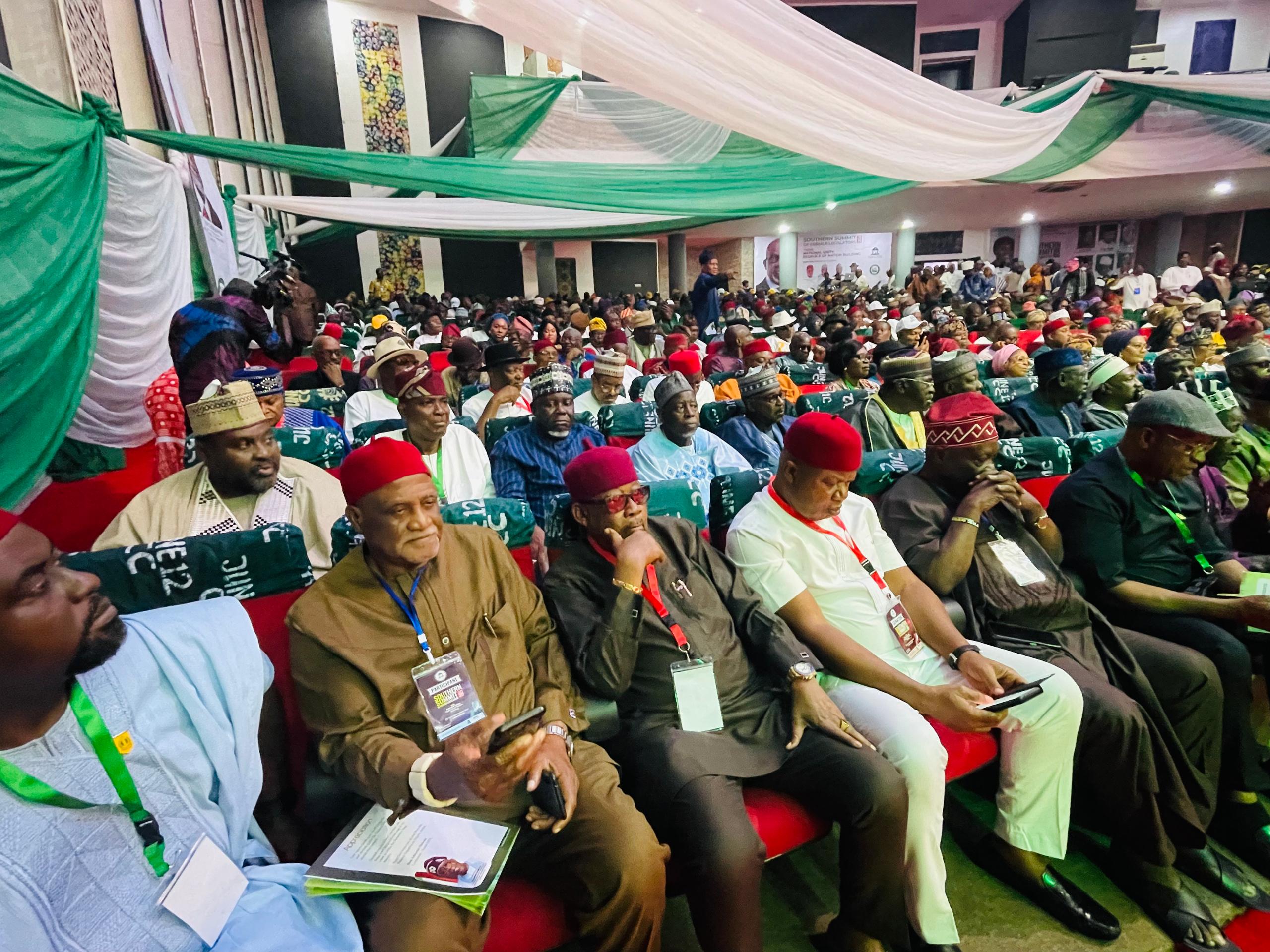
The Southern Caucus of the National Forum of Former Legislators on Saturday declared support for President Bola Ahmed Tinubu’s re-election bid, adopting him as the “sole candidate of the South” and urging Nigerians to rally behind him to complete what they described as “the southern tenure” of the presidency before power rotates to the North in 2031.
In a communiqué issued at the end of its summit in Abeokuta, the caucus praised the Tinubu administration’s reform agenda, citing the establishment of Regional Development Commissions, the push for local government autonomy, the rollout of a student loan scheme, and the deregulation of Nigeria’s electricity sector as landmark achievements.
“We commend the innovative reforms of government, which include among others, the establishment of Regional Development Commissions, Local Government Autonomy, Student Loans Scheme, and Deregulation of the Electricity Sector.
“We call for greater collaboration of state governments and the support of citizens alike to harvest the great potentials of these reforms”, the communiqué stated.
The former lawmakers also commended their northern counterparts for what they described as a patriotic decision to support the South in completing its tenure.
“We affirm that it is the turn of the South to complete its tenure. It is in the best interest of the South and the nation that the incumbent, President Bola Ahmed Tinubu, completes the tenure of the South. Accordingly, we adopt him as the sole candidate of the South,” the statement added.
The caucus pledged to back the North in 2031 to take over leadership of the country, calling on Nigerians across political, ethnic, and religious divides to embrace the arrangement as a way to strengthen national unity and consolidate democratic stability.
Chief of Staff to the President, Rt. Hon. Femi Gbajabiamila, who convened the summit, delivered the keynote address that combined economic performance data with a strong appeal for unity and reconciliation.
Extending the President’s greetings, Gbajabiamila said Tinubu’s reforms were guided by “an unassailable belief that while it is not in our power to change the past, it is our obligation to do the hard work today so that our tomorrow can be better than all our yesteryears.”
He pointed to recent economic indicators as signs of progress. According to him, Nigeria’s economy expanded by 4.6% year-on-year in the fourth quarter of 2024, pushing annual growth to 3.4%—its fastest in a decade. He added that the fiscal deficit narrowed from 5.4% of GDP in 2023 to 3.0% in 2024, driven by a sharp rise in Federation revenues from ₦16.8 trillion in 2023 to ₦31.9 trillion in 2024.
Gbajabiamila also noted that inflation eased slightly from 24.5% in January 2025 to 23% by May, while foreign portfolio investment surged to US$5.46 billion in the first quarter of 2025, a 67% jump from the previous quarter.
Despite the gains, he warned that the road to recovery remains demanding. “Fixing the things that have long been broken imposes costs, entails sacrifice and requires time,” he said.
On national cohesion, Gbajabiamila stressed that unity was indispensable to development. “National unity is the sine qua non for national development. Where there is no peace, there cannot be progress,” he said, urging Nigerians to embrace dialogue, tolerance, and forgiveness.
“Unity does not mean we must all think alike, vote alike, or worship in the same way. But it does mean that we must agree on one thing, Nigeria belongs to all of us, and we will rise together or fall together,” he said.
In his words: “Let us rise from this day with renewed determination to build a Nigeria where unity is a lived reality, where our diversity is our greatest strength, and where generations yet unborn will be proud to travel the ends of the earth and declare with confidence, like the Romans of old, ‘I am a Nigerian.’”
The summit, held at the June 12 Cultural Centre in Abeokuta, brought together former legislators from across the southern states and reinforced both the political stakes and the enduring call for unity as the nation inches closer to the 2027 general elections.